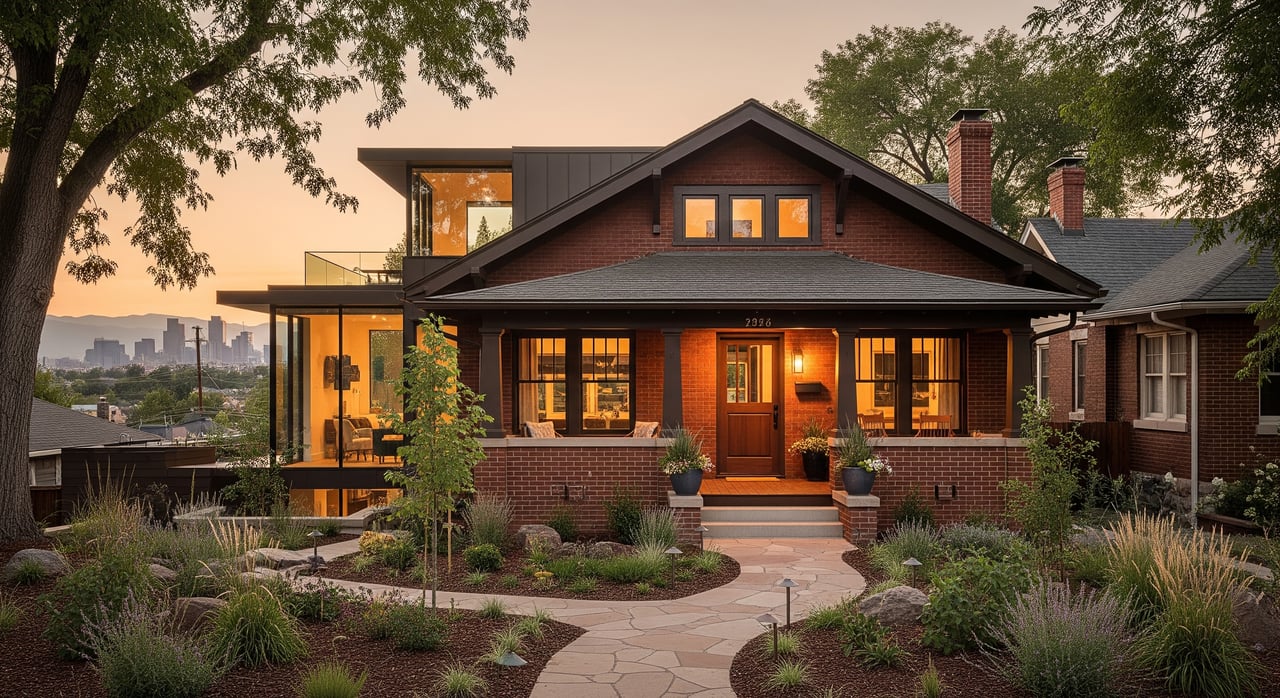
If you want to live in East Denver and start building wealth right away, owner‑occupant investing can be a smart path. With the right down‑payment assistance, you can reduce upfront costs and use rent from another unit or a roommate to help cover the mortgage. In this guide, you’ll learn how programs like metroDPA and CHFA work with FHA and conventional loans, what rules matter, and the steps to get started. Let’s dive in.
What owner‑occupant investing means
Owner‑occupant investing is simple. You buy a home you will live in and legally rent part of it to offset costs.
- House‑hack a 2–4 unit property and live in one unit.
- Buy a single‑family home and rent an ADU or spare bedrooms to long‑term tenants.
- Live in the home for the required period, then consider converting it to a full rental later.
Each approach must meet loan and program rules for primary residence use.
How down‑payment assistance works
Down‑payment assistance (DPA) helps cover part of your down payment and sometimes closing costs. Common forms include grants that may be forgiven after a set time, deferred second mortgages repaid when you sell or refinance, and low‑interest second loans with payments.
- metroDPA. Denver’s metroDPA pairs with FHA, Conventional, USDA, and VA loans. The assistance is typically a deferred second lien with no interest and no monthly payment, due when the first mortgage is repaid. Program materials note minimum credit scores around the low‑600s and income caps that have recently reached into the $200,000 range, subject to updates. Check the current details on the official metroDPA program page.
- HOST Social Equity expansion. Denver’s Department of Housing Stability announced a Social Equity component that, when funded, has provided awards such as $15,000 or $25,000 that are interest‑free and not repaid if you meet the terms. See the city’s program announcement for background and watch for updates.
- CHFA and CHAC. The Colorado Housing and Finance Authority offers DPA second‑mortgage options with clear repayment rules and required education. Review CHFA’s Down Payment Assistance page. The City also references CHAC as a resource; see Denver’s Affordable Home Ownership hub for local assistance links.
As of early 2025, East Denver listing prices often land around the low $600,000s, which can make down payments feel steep. Recent reporting shows typical metro Denver down payments in the tens of thousands, underscoring why even a $10,000 to $25,000 DPA can help buyers compete and conserve cash. See local context in this Denver down‑payment snapshot.
FHA and occupancy rules you must follow
FHA allows you to buy a 2–4 unit property if you live in one unit as your primary residence. FHA expects occupancy within 60 days and generally for at least one year. Review federal guidance on FHA occupancy and use.
DPA programs layer on their own timelines. Some forgive assistance after a set number of years. Others require repayment when the home stops being your primary residence, even if FHA’s one‑year mark has passed. Always verify the DPA’s occupancy and repayment terms in writing using the metroDPA program page and your lender’s documentation.
Pairing DPA with house‑hacking strategies
Duplex or 2–4 units
You can use DPA with an FHA or eligible conventional loan to buy a duplex, triplex, or fourplex if you live in one unit. Lenders may allow projected rent from the other unit(s) for qualification, subject to documentation and reserve requirements. Confirm how your lender will treat rental income when using DPA.
Single‑family with ADU or room rental
If you buy a single‑family home, you may rent an ADU or spare bedrooms to long‑term tenants. FHA has specific documentation rules for rental or boarder income, and lenders can add their own overlays. Review the latest FHA guidance with your loan officer using HUD’s single‑family resources.
Live now, rent later
Some buyers plan to live in the home, then convert it to a full rental. This can work, but the DPA terms control the timeline. If you move out early or stop using the home as your primary residence, you may have to repay assistance right away. Align the DPA’s forgiveness or deferral schedule with your plan before you write offers.
Local rules that affect your plan
- Rental licensing. Denver requires residential rental licenses for long‑term rentals and has stepped up enforcement. Unlicensed renting can bring fines, so plan licensing into your timeline. See recent enforcement coverage.
- Short‑term rentals. STRs are allowed only in your primary residence and require a city license. Non‑owner‑occupied STRs are generally prohibited. Review Denver’s short‑term rental licensing rules before making STR income part of your plan.
- Taxes when you sell. If you convert your home to a rental and later sell, federal Section 121 rules govern gain exclusion. You must use the home as your principal residence for at least 2 of the 5 years before sale for the full exclusion, and nonqualified use can affect calculations. Read IRS Topic 701 on the sale of your home and talk with a CPA.
What this means for East Denver buyers
With prices that often hover around the $600,000 range, combining DPA with an owner‑occupant strategy can put the right East Denver property within reach. metroDPA and CHFA can reduce upfront cash needs, FHA can allow 2–4 unit purchases, and local rental rules clarify what income plans are feasible. The key is aligning the loan, the DPA, and your occupancy plan from day one.
Step‑by‑step: Use DPA to house‑hack
- Confirm eligibility and fit
- Review metroDPA and CHFA options for income limits, credit score minimums, and property types. Start with the metroDPA program and CHFA’s DPA overview. Check Denver’s Affordable Home Ownership page for CHAC and local resources.
- Get prequalified with a participating lender
- DPA programs require approved lenders and sometimes special training. Prequalify using the exact DPA product you plan to use so your numbers reflect assistance and any overlays.
- Verify property type eligibility
- Confirm that a duplex, triplex, or single‑family with an ADU meets both the first‑mortgage and DPA rules. Ask your lender to verify in writing.
- Model rental income and reserves
- Work with your loan officer on how unit, ADU, or boarder income will be documented and counted. Budget for reserves and repairs.
- Lock in your compliance plan
- Get the DPA occupancy and repayment terms in writing. Note move‑in deadlines, forgiveness timelines, and triggers that require repayment.
- Complete education requirements
- Many programs require homebuyer education before closing. CHFA outlines the process on its DPA page.
- Plan for licensing and STR rules
- If you will rent part of the property, map out licensing steps and confirm whether STRs are allowed for your use case using the city’s STR rules.
- Keep proof of occupancy
- Maintain records like utility bills and voter registration at the property. Programs and licensing may ask for evidence that the home is your primary residence.
Common pitfalls to avoid
- Assuming FHA’s one‑year occupancy means the DPA is forgiven. DPA terms control forgiveness and repayment.
- Counting on short‑term rental income without a license or eligibility. Denver’s STR rules are strict.
- Ignoring lender overlays. Even if a program allows a structure, your lender may require higher credit, lower DTI, or more reserves.
- Renting without a license. Denver actively enforces long‑term rental licensing, and fines add up fast.
Ready to find an East Denver property that fits your plan and run the numbers on DPA, loan options, and rental income? Connect with John Baldree to align your search, financing, and compliance from prequalification to closing.
FAQs
Can I use DPA to buy a duplex in East Denver?
- Yes. Many DPAs pair with FHA or conventional loans that allow 2–4 units when you live in one unit, but confirm program and lender specifics before you write an offer.
How long do I have to live in the property?
- FHA expects you to move in within 60 days and generally for at least one year, while many DPAs require continued primary residence longer or repayment if you move out early.
Can I count rent from the other unit or a roommate to qualify?
- Often yes, but documentation standards vary; your lender will explain what leases, appraiser rent schedules, or history are needed and how much income can be used.
Can I do Airbnb while I live there?
- Only if the home is your primary residence and you obtain a Denver short‑term rental license; non‑owner‑occupied STRs are generally not allowed.
When can I convert the home to a full rental without penalty?
- It depends on your DPA’s forgiveness or repayment schedule; some assistance is deferred until you sell or refinance, and conversion to rental can trigger repayment immediately.