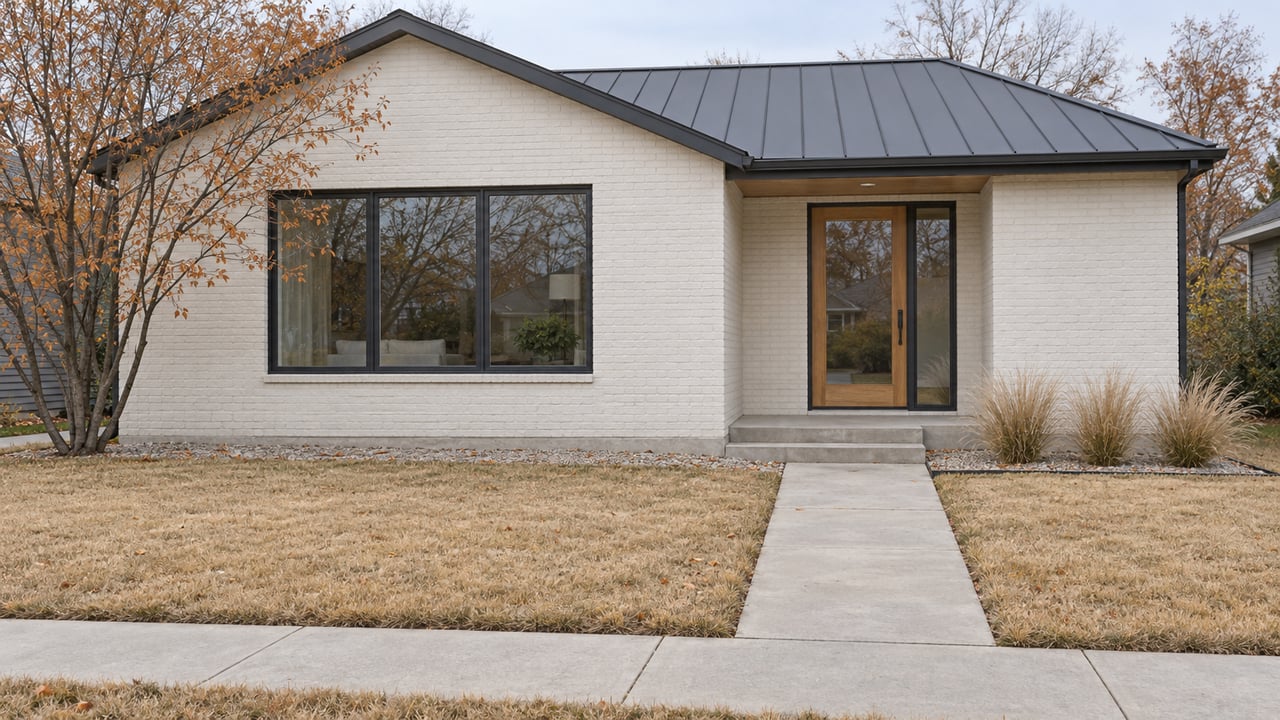
D.R. Horton lists a house at 18101 Coppermallow Trail in Parker's Trails at Crowfoot listed at $619,995, down from $708,935. That price cut stands out on a listing page. The bigger number on that page is the interest rate. D.R. Horton is advertising a 5.99% fixed conventional rate and a 5.50% fixed FHA rate on certain Colorado homes, in a week when Freddie Mac's national 30-year average for the week ending November 12, 2026 was 7.11%.
Most metro sellers are paying a resale buyer too, just less visibly. In October 2026, 65% of Denver-metro home sales involved a seller concession, and the average concession was $12,557, according to the Denver Metro Association of Realtors' October report. A builder rate and a resale concession are the same thing: seller money that lowers what the buyer pays. The builder sets its version in advance, ties it to its own lender and puts a closing deadline on it. The resale version is decided offer by offer. A buyer comparing a new home with a resale home on list price alone is leaving out the largest number in both deals.
The Concession Is Already Part of the Price
DMAR spelled this out in its October report: "A seller credit that covers closing costs or pays for a rate buydown can be worth more to a buyer than the same dollars off the price, and it records a higher sale price in the data." That explains how the metro detached median can stay at $645,000 in October while buyers still win on terms. Detached homes sold at 98.55% of list price in a median of 26 days, and the year-to-date detached median of $650,000 matched both 2025 and 2024.
The Colorado Association of REALTORS' October release puts it the same way: 49% of seven-county Denver-metro transactions that month involved a price reduction, and nearly 64% included seller concessions. In other words, in October roughly two of every three closed resales came with a credit that the median price doesn't show.
Builders follow the same logic at larger scale. A rate buydown leaves the sale price intact on paper and lowers the monthly payment.
What the Builder Rate Is Worth in Dollars
Toll Brothers publishes the cleanest example. Its offer is 5.49% fixed for 30 years, 5.76% APR, on select quick-move-in homes, based on a $500,000 loan with a payment factor of $5.67 per $1,000 financed. That works out to about $2,835 a month in principal and interest. The same $500,000 at the 7.11% national average comes to roughly $3,363, so the gap is a little over $525 a month, or about $6,300 a year, before taxes and insurance.
Set that against the $12,557 average resale concession from October. A typical resale credit covers about two years of the payment gap that Toll's rate erases on that loan size. The builder rate lasts the life of the loan for as long as the buyer keeps it. The resale credit is a one-time sum, and the buyer chooses how to spend it: closing costs, a rate buydown, or some of each. On a long hold, the builder rate usually wins in raw dollars. For a buyer who expects to refinance once rates drop, the gap shrinks.
Rates are high for reasons outside Colorado. The Denver Post reported on September 10 that the 10-year Treasury yield had reached 4.95% as oil topped $100, and its September 11 report tied faster August inflation to expectations of higher borrowing costs. DMAR connects October's 2,748 metro closings, the fewest for an October since 2010, to September's rise in mortgage rates. Freddie Mac's November 12 release shows rates down for four straight weeks to their lowest level in seven weeks, though still well above the 6.24% average from the same week in 2025.
These figures are general information for comparison and are not financial advice. Rates and terms depend on the borrower, so confirm your own numbers with a licensed loan officer before you choose between offers.
The Conditions Attached to Each Builder Offer
Each advertised builder rate comes with its own lender, down payment requirement and calendar. Those conditions shape the decision as much as the rate does.
| Builder | Advertised offer | Lender required | Key conditions | Contract window | Close by |
|---|---|---|---|---|---|
| D.R. Horton | 5.99% conventional, 6.400% APR; 5.50% FHA, 6.362% APR | DHI Mortgage | Conventional needs 5% down, FHA 3.5%; certain homes only; primary residence | On or after 9/29/26 | 1/29/27 |
| Toll Brothers | 5.49% 30-year fixed, 5.76% APR | Toll Brothers Mortgage | At least 10% down; 740 credit in the example; no FHA or VA | On or after 10/8/26 | 1/8/27 |
| Lennar | Up to $5,000 toward closing costs | Lennar Mortgage | Select move-in-ready homes in Colorado | By 12/15/26 | 12/31/26 |
The fine print matters. D.R. Horton says its rate comes from a pool of funds locked through DHI Mortgage and is available only until that pool runs out. It also says the rate "may require borrower to pay points." Toll Brothers says buyers with credit scores under 740 face additional costs that can raise the APR, and that the rate can expire without notice. Toll's Denver-area quick-move-in homes include homes at Painted Prairie, Erie Town Center and Wilder Ranch, and the offer applies only to select homes, so ask which addresses qualify before you tour.
D.R. Horton is also running a second, separate program for FHA and VA buyers. Under its holiday "Settle In" program, buyers who contract between November 2 and December 31, 2026 and close before February 26, 2027 get a temporary payment reduction funded by seller contributions held in escrow. The borrower still has to qualify at the full payment. That is a short-term payment cut, so compare it with the fixed 5.50% offer as a different kind of help.
Today is November 19. A buyer who wants Lennar's closing-cost credit has less than four weeks to sign. Toll's closing deadline falls in the first week of January, and D.R. Horton's falls at the end of January. Every one of these offers has a closing deadline no later than January 29, 2027. A resale seller's room to negotiate has no such date.
Where Resale Sellers Have Room
County data shows where a resale buyer can push for a larger credit. These figures come from the Colorado Association of REALTORS' October 2026 county reports, which leave seller concessions out of their metrics.
Douglas County, home to Trails at Crowfoot in Parker, had a $707,000 median for detached homes in October. They sat a median of 54 days, and the county had 3.6 months of supply. A resale seller there has been on the market nearly two months and is competing with a builder down the road that advertises a sub-6% rate. That seller has a reason to talk about a buydown credit.
Adams County detached homes held up better in October, at 99.4% of list price with a flat $510,000 median. Adams County attached homes took a median of 102 days and sold at 97.2% of list. Arapahoe County detached homes sold in a median of 40 days with 3.2 months of supply. Broomfield County was the tightest of the four for detached homes, with 2.7 months of supply.
Condos and townhomes have the most room metro-wide. DMAR put attached supply above seven months in October, with a median of 48 days and a close-to-list ratio of 97.69%, down from 98.17% a year earlier. An attached-home buyer in that market can reasonably ask for a credit at or above the metro average, because the seller is the one waiting.
The rate fight runs both ways. DMAR notes that a seller credit can pay for a rate buydown, and a resale seller has no affiliated mortgage company attached to that credit. A buyer who prefers a resale home in an established area to a quick-move-in home in a new subdivision can often negotiate the payment difference down rather than accept it. Our guide to new construction or resale in Northeast Denver covers the other differences between the two.
Questions Buyers Ask About These Offers
Can I take a builder's rate and use my own lender? Each of the three offers names the builder's affiliated mortgage company as a condition. D.R. Horton's terms say a buyer isn't required to finance through DHI Mortgage to purchase the home but must use DHI Mortgage to receive the advertised rate. A fair comparison puts the builder lender's Loan Estimate next to an outside lender's quote that includes any concession you could negotiate.
What if the house I like closes after the deadline? Each offer is tied to a specific closing date listed in the table above, and the advertised terms are written around that date. A home still under construction may not finish in time, so ask for the expected completion date alongside the rate.
Is the $12,557 average concession a fair target? DMAR's figure is a metro-wide average for October 2026 across all price points and property types. The credit on any one home depends on how long it has been listed, how it's priced and what else is competing for buyers nearby.
Comparing a builder's rate with a resale credit comes down to payments, deadlines and which lender holds the loan, and that's the kind of decision John Baldree handles as both your agent and your loan originator. Before you sign with a builder's lender or write an offer on a resale home, let's put both payments side by side using your actual numbers and January's deadlines. Let's Connect.