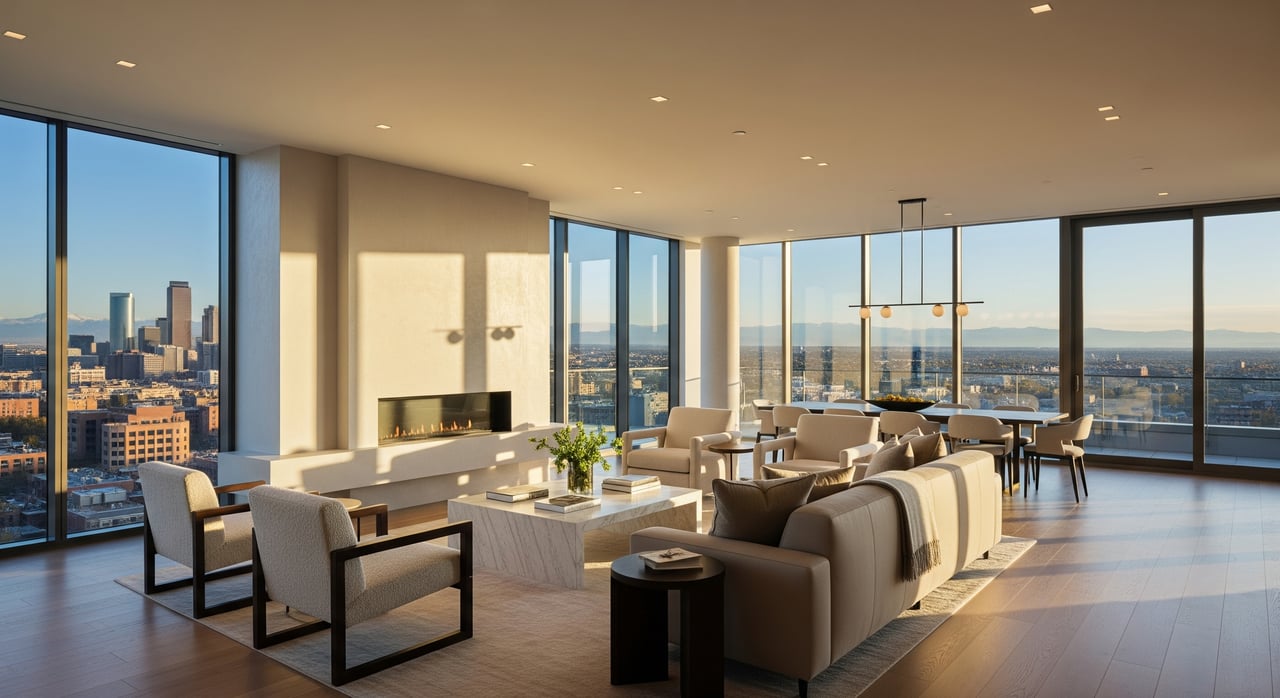
Are you using price per square foot to judge a Denver home’s value? You are not alone. It is a fast way to compare listings, but it can lead you in the wrong direction if you do not use it correctly. In this guide, you will learn what price per square foot really tells you, when it helps, when it misleads, and a practical way to compare homes across Denver’s micro-markets. Let’s dive in.
Price per square foot basics
Price per square foot (PPSF) is the sale price divided by the reported square footage. It is a quick way to normalize prices so you can compare homes of different sizes. It is a descriptive metric, not a substitute for a full comparative market analysis.
Think of PPSF as a starting point. It helps you scan the market, but it does not account for many things that buyers value. You still need to consider condition, location, lot, basement finish, and market timing.
When PPSF helps
- Fast screening during early searches to flag outliers.
- Comparing homes of the same type, similar age, and in the same neighborhood.
- Viewing broad price trends across areas or property types.
When PPSF misleads
- Inconsistent square footage, such as mixing above-grade living area with basement space.
- Size bias, where smaller homes or condos often show higher PPSF than larger homes.
- Missing value drivers like lot size, parking, outdoor space, views, and zoning.
- Property type mismatches, such as comparing condos to single-family homes.
- Time sensitivity, since Denver’s market can shift faster than older comps reflect.
Denver factors that shift PPSF
Neighborhood and location
Central neighborhoods like Capitol Hill, Cherry Creek, Washington Park, and LoDo often command higher PPSF due to proximity to downtown, amenities, and limited land. Outer suburbs may show lower PPSF but offer larger lots and more square footage. Transit access and light rail stations can push PPSF higher nearby.
Age and architectural era
Older homes, including bungalows and Denver Squares, can measure and live differently than newer builds. Floor plans, ceiling heights, and basement quality vary, which affects how buyers value each square foot. Newer infill homes often achieve higher PPSF due to modern systems and layouts.
Basements and above-grade area
Many Denver homes have basements. Finished basements usually contribute less value per square foot than above-grade living space. For better comparisons, separate above-grade gross living area from basement area.
Property type and HOA
Condos often show higher raw PPSF than single-family homes. That number does not include HOA fees, parking and storage differences, or land ownership. Townhomes and duplexes fall between condos and single-family values depending on maintenance and outdoor space.
Lot size, outdoor space, and views
Usable yards, patios, and mountain or skyline views add value that PPSF does not capture. Larger lots can lower PPSF by spreading land cost across more area, while small infill lots can increase PPSF.
Condition, updates, and systems
Updated kitchens and baths, new roofs or HVAC, and energy upgrades can lift effective PPSF. A remodeled older home in a desirable area can sell at a PPSF similar to newer properties.
Zoning and ADUs
Lots with up-zoning, ADU potential, or redevelopment rights often sell at higher effective PPSF. These benefits are not visible in raw per-square-foot numbers.
Measurement and reporting
Public records and MLS fields may not match. Appraisers, assessors, and MLS systems can count area differently. Be explicit about which square-footage basis you are using, and keep it consistent across your comparisons.
How to compare comps in Denver
Follow this step-by-step process to make PPSF work for you.
- Define the scope
- Compare like with like. Keep single-family, townhomes, condos, and duplexes in separate groups.
- Stick to the same neighborhood or very similar adjacent areas.
- Use recent sales. Aim for the most recent 90 to 180 days, adjusting for faster markets when needed.
- Standardize square footage
- Use the same square-footage basis across all comps. Above-grade gross living area works well for single-family comparisons.
- Treat finished basement area separately. Do not lump it into the denominator unless every comp uses the same convention.
- Adjust for condition and finished basement
- Finished basements usually contribute less per square foot than above-grade space. Consider ceiling height, egress, natural light, and entrances when judging quality.
- Account for major updates like kitchens, baths, roofs, windows, and systems.
- Adjust for lot, parking, and outdoor amenities
- Consider lot size and utility, decks or patios, off-street parking, and garages. These carry real value in urban neighborhoods.
- Account for views and location premiums
- Mountain or skyline views, proximity to parks and transit, or exposure to arterial noise all affect value. Adjust or exclude as needed.
- Adjust for time and market conditions
- If the market has shifted since a comparable sold, apply a time adjustment using recent local trends. Be clear about the period you use.
- Compare adjusted PPSF
- After making your adjustments, compute adjusted sale prices and then an adjusted PPSF using the same square-footage basis.
- If you prefer, show both raw PPSF and the key adjustments so the differences make sense.
- Cross-check with other metrics
- Look at price per bedroom or bathroom, days on market, and replacement cost for new construction. Use multiple yardsticks to confirm your read.
Quick comparison checklist
- Separate property types and stick to the same neighborhood.
- Use the same square-footage basis for every comp.
- Treat finished basements as a separate component.
- Adjust for condition, lot, parking, outdoor space, and views.
- Make time adjustments when market direction changes.
- Cross-check with other simple metrics before you decide.
Common pitfalls to avoid
- Mixing condos, townhomes, and detached homes in one PPSF set without adjustments.
- Using assessor square footage without confirming how it was measured.
- Ignoring basement and garage treatment, which changes effective PPSF.
- Relying on old comps without time adjustments in a changing market.
- Assuming a higher PPSF means a better value.
- Applying a condo’s PPSF directly to a much larger single-family home.
The bottom line
Price per square foot is useful when you control for property type, location, time, and how square footage is measured. It is not a price tag. Use it to filter your search, then make thoughtful adjustments for the features that matter in Denver.
If you want help pricing a home or choosing between neighborhoods, get a full, Denver-specific comparison with integrated financing guidance. Connect with John Baldree to streamline your search, pricing strategy, and loan coordination from offer to close.
FAQs
Should I use PPSF to price my Denver home?
- Use PPSF as a quick check, then rely on a full CMA that adjusts for age, condition, basement finish, lot, and current market momentum.
How should basements be counted in Denver comps?
- Separate above-grade living area from finished basement space. Treat the basement as an added component, which usually contributes less value per square foot.
Is PPSF the same for condos and single-family homes?
- No. Condos often show higher raw PPSF and different ownership costs. Compare condos to condos unless you are making careful adjustments.
How many comps should I consider in Denver?
- Aim for at least three to six recent, truly comparable sales. Add more only if they are similar in type, location, and condition.
Are PPSF heatmaps accurate for Denver neighborhoods?
- They are helpful for broad trends but depend on data rules and can lag. Always confirm details through MLS or public records for each property.
What size PPSF difference is meaningful?
- Small gaps may be noise. Larger variations usually reflect real differences in location, condition, features, or measurement method.